What’s New in the fire
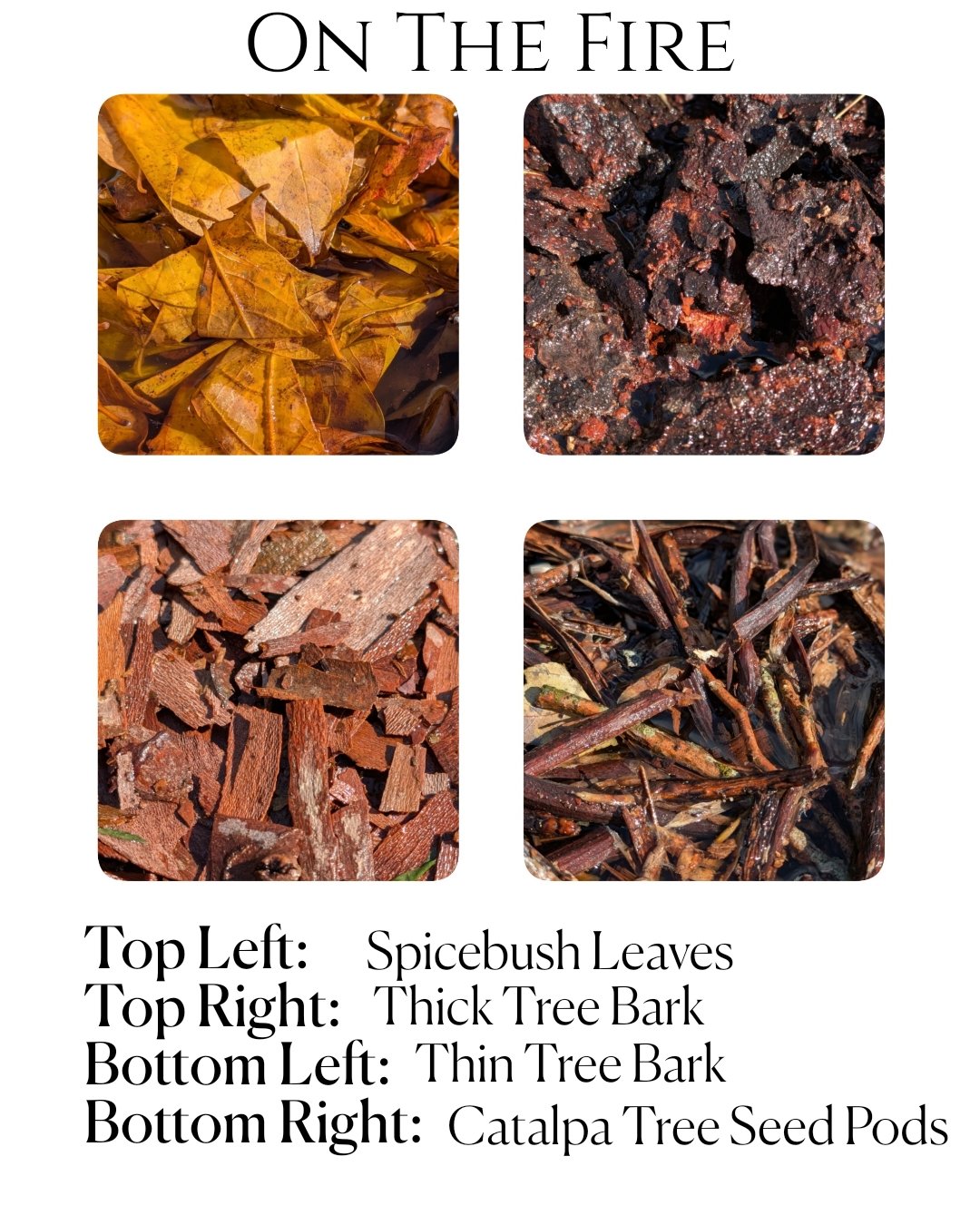
In “olden” times (when my children were little), a good thrifting trip was a success if I found something for me and them. These days, we each do our own thrifting. I hit the kitchen section first, and proof of a successful trip is finding a steel cooking pot, and if I’m lucky, the matching lid. This week - in my smallest vintage pot - I have the last of this year’s Spicebush leaves - which were gathered by the creek. I also have 2 tall pots full of two kinds of fallen bark - one of which is a very thin single layer of bark (maybe Sycamore), and the second is a thick multi-layered bark from one of our maple trees, that sheds in the front yard. The newest addition to the fire, is the gorgeous long spent seed pods that fell from one of our Catalpa trees. I’ve been gathering the seed pods when I began noticing them a few weeks ago and finally had a full Lowe’s bucket. These may not produce a desired color, but I’m willing to augment with Iron to get a nice green if necessary.
And now the wait for latest fiber to dye is nearly at an end. I ordered more cotton/hemp for smaller weaving projects, and for the first time - worsted wool - for winter knitting projects. This weekend, I will strain the plant material out of the dye pots, and add the latest fibers, and gently heat them up over a new fire, and let them soak for a while.
iT’S NICE TO MEET YOU luna
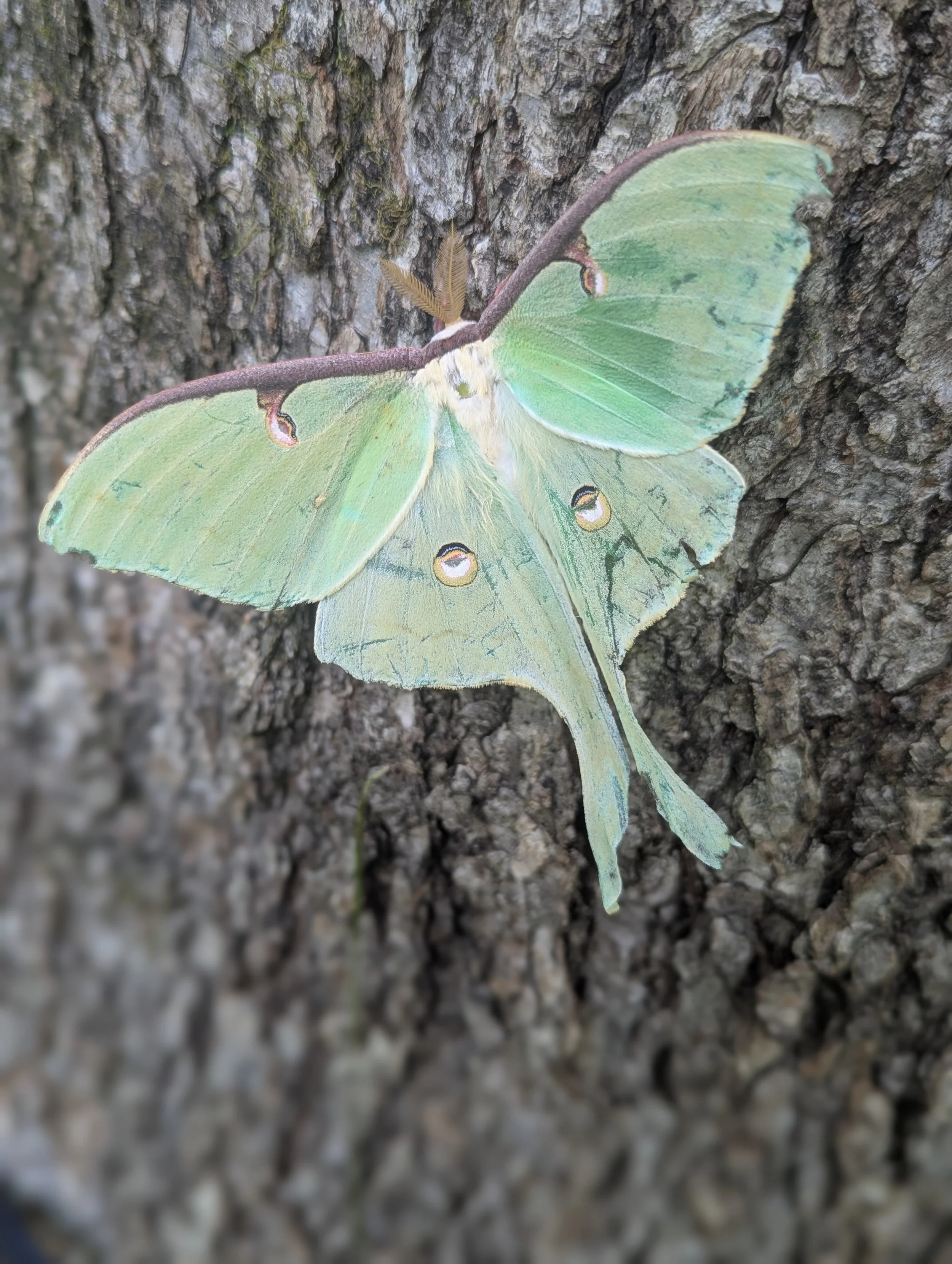
I adore Luna Moths. The first time that I saw one, was oddly enough in a campground bathroom. If you’ve visited these often, they are not necessarily lovely places to spend a lot of time. However, I was so excited when I saw the moth, and at the time although I didn’t know what kind of moth it was, I was mesmerized by it’s sheer size and beautiful coloring. I wanted to share this experience with my daughters, so I did, I pointed it out to them. But at the time - as fairly small children - but it turned out that big unfamiliar scary insects in a place they didn’t want to be in the first place - was not their idea of fun. But from that day on, I was just fascinated with them.
For the first time, in late summer, I was walking in the yard and saw one at the base of a tree. It was gorgeous. I spent about an hour admiring it and feeling lucky to have found it. I figure, that if they entire life span was about 10 days total, I was pretty fortunate to spend a little time with it. For years I’ve had moonflowers, in hopes of attracting that the fragrance would attract them to the yard, and maybe my plan finally worked. I can only hope that they laid some eggs nearby and maybe I’ll see another one next summer. Fingers crossed!

Critters - the good?
So, yes, the moral of the last post was that the Spotted Lantern Flies are bad for local crops, but surely, Ladybugs can do no harm, right? They are so adorable when you see them on a tree trunk, or on beautiful bloom you are gathering to fiber dyeing. But what if they are crawling up your new custom blinds? The bathroom ceiling? Gathering in large mysterious clusters by the back door? You are finding them on your salad plate? Crawling all over the backside of your house? On your back? Dropping from the ceiling into your bed? Down the back of your shirt? Now it sounds like a horror film, right?
Sweet little ladybugs gathering to drive you mad, I mean actually they are trying to get warm and stay alive, but must they do so in such large numbers and weird places? I’ll always be on “team ladybug” outdoors, but when indoors and they are climbing near my salad, or in my shirt - they are not my friend, and they’ve crossed a line.
Critters - the bad
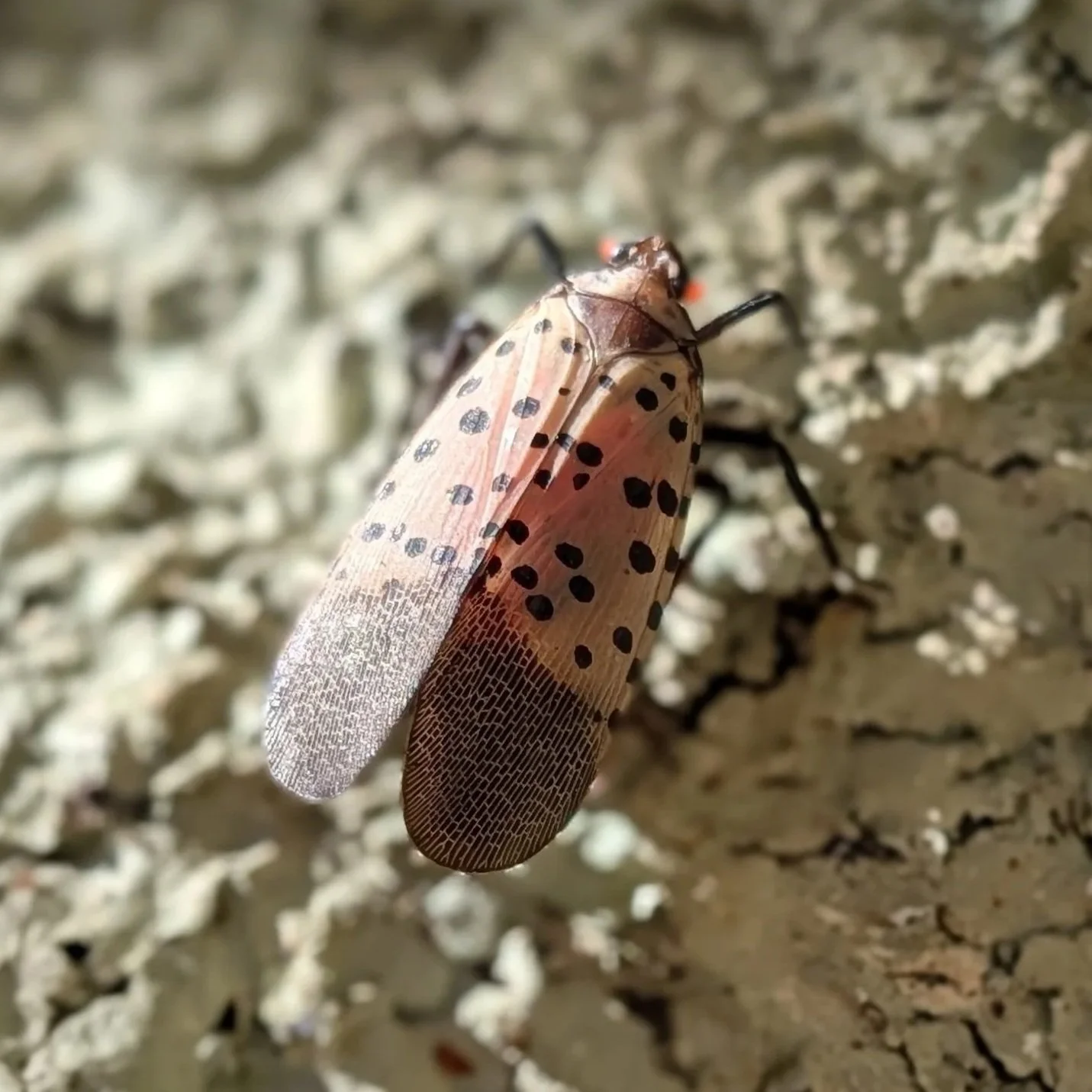
I am typically the absolute last one in my family to kill an insect. (Except for that one spider that I tortured during COVID (Give me a break, I spent most of my days dodging 3 family members screens for work & school). However, we now have discovered that Spotted Lantern Flies have been enjoying our maples this fall, and they are very destructive to the abundant Wine Grape Crops in our area. If I don’t watch out, they will also damage many things on our own property, including our future garden plans (and so much for our plans for a personal wine grape crop). Here is the current problem - we can’t see if they have already laid their eggs and are dying off as temperatures are dropping, or if they were in the process of doing so. So, to be blunt, they had to go. When at their peak, these guys can easily escape your attempts to lessen their numbers, but since the cold was setting in and they were close to death - most were easy to destroy.
But……since they aren’t moving as quickly, why not document them up close since they are in fact quite stunning (and creepy at the same time). Knowing the more that I kill, the less eggs there will be in the spring kept me going, BUT whatever you do, do not look up the trunk of the tree, or at the leaves on each branch. You will be disheartened at all of the ones that are out of reach and probably laying little masses of 30-50 eggs and taunting you as you crush their cohorts within arms-reach. According to the link I supplied above, I now need to target the egg masses (within reach) and be ready for the arrival of their beautiful speckled black and white nymphs in the spring, and take action with sticky tape and more. I’ll be ready.
*Loads of Spotted Lantern Flies were harmed in this process out of necessity.
*I’ve included more photos of them in my gallery (BEFORE their inevitable demise)
The Good part
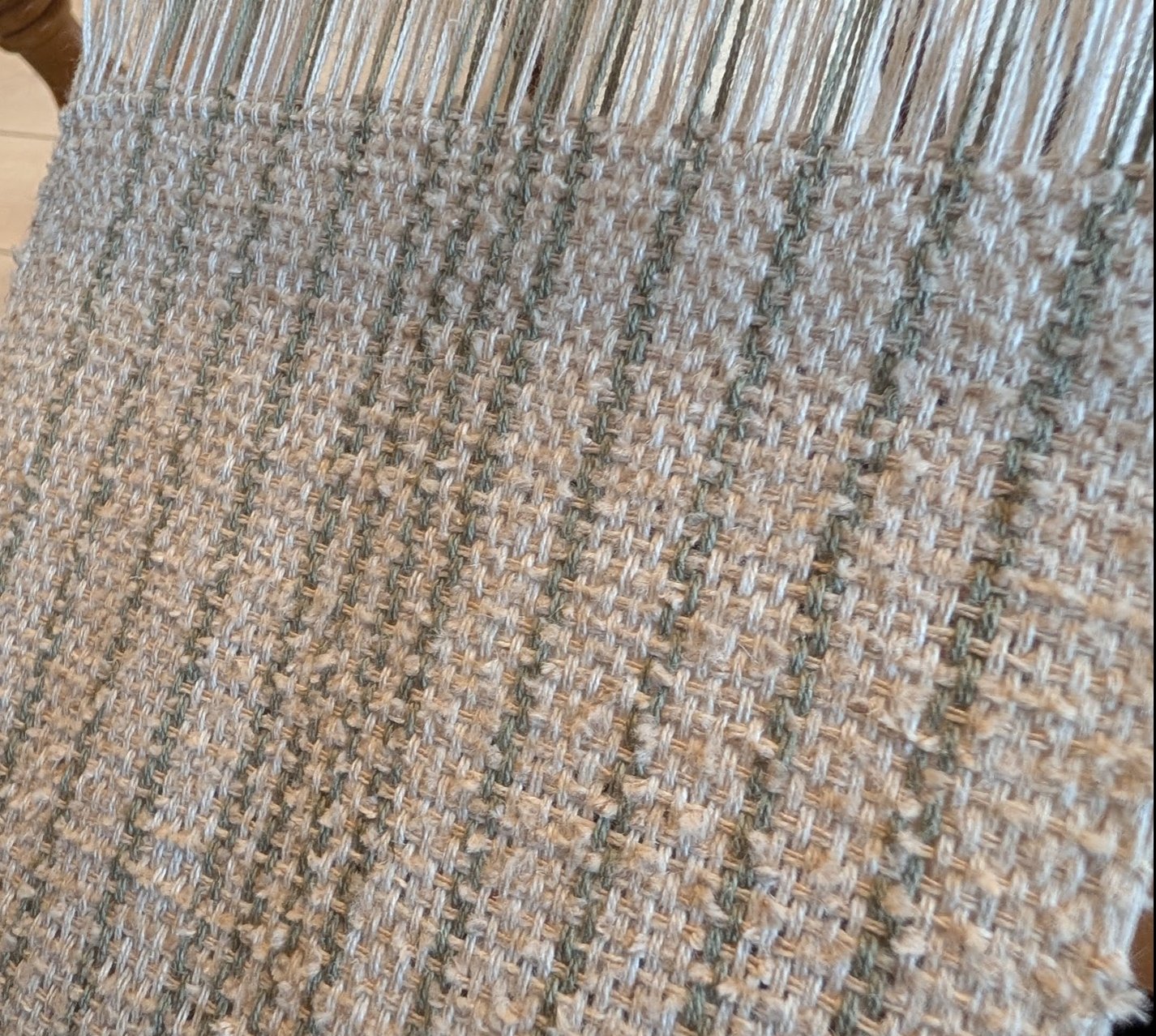
Unfortunately, I cannot weave fresh flowers into my designs. However, I can weave with the unexpected colors that they leave behind after cooking these plants over the fire or soaking up the color overnight or several days. I’ll admit, I’ve not been super patient about waiting until the yarn has set long enough after dyeing, because I just wanted to get to the good part - the weaving. But I’m learning that ‘The Good Part’, started way before the weaving. I love taking the walks to collect the bark and blooms, observing the critters (both the good and the bad, see my next post for more on that), learning to build better fires (without having to call in my husband or daughter to assist), and maybe adding a last minute sprinkling of iron or copper that shifts the color in another direction. The weaving itself is the culmination of everything that led up to that point.
I’m just beginning to weave with a few of my colors, and I am so excited to hopefully be offering them soon in my shop. Stay tuned, for my next post about “Critters, The Good and The Bad”.

More About those walnuts
There are so many walnuts to me to work with, which means I have a little wiggle room with playing with the brown tones in the dye bath. Obviously, we also have eaten a lot of walnuts in the past few years that we’ve lived here, but right now, I am more focused on getting them simmering over the fire and figuring out how to get the most color to stay in the fiber, and even put in a few additions to see what changes I can introduce. By introducing Copper, Iron, and changing the number of Black Walnuts in the bath, a lot of tones can be created. Wish me luck!

The Walnuts are falling
Watch out! It’s no joke when those Black Walnuts hit the ground in fall. I’m not always toting something for picking them up either, so in the picture - that is my shirt that held quite a few as you can see. It’s basically a Fall easter egg hunt, and you might miss some because they are green! Last year, I did a dry run of a super small batch of 8/2 weaving yarns dyed in black walnut that I am using currently in one of my designs. This year, I have dyed a larger batch of that same yarn in addition to gorgeous Alpaca where I ended up with a gorgeous brown. I will create a photo gallery here soon to show more of the process, including the design that I have incorporated some of the 8/2 weaving yarn into already. Stay tuned for More on the Black Walnut Dye.

Iron, Wingstem, & Heat
After initially playing with Wingstem, I decided to add Iron to the same dye bath, and I might have accidentally put in too much. It made an intense dark green with heat, and I fell in love all with it all over again. In the future, I will be making my own iron solution, but for now I bought a granular mix that you add to your dye. I’ve since learned that you can go overboard with Iron and still love the result. Next up, #4 - Black Walnuts!

Golden Rod & spiceBush
Plant #2 & #3 are Golden Rod & Spicebush. For this one, I took the gorgeous brilliant yellow blooms from the Golden Rod and mixed it with about a million fallen Spicebush leaves in September. Once I filled a pot with the mix, I covered it with water and let it sit overnight until I had a fire for it to simmer on the next day. They just made a beautiful amber color in the pot, and I would say a golden yellow on the Cotton/Hemp 8/2 Yarn. In my next post, when I dyed with Golden Rod on its own, it seemed a bit more unstable on the fiber, was splotchy, so I will work on that next time around. In the next post, I play by added Iron to a Wingstem dye bath to see what changes I get.

Plant #1 - Wingstem
I must confess, these first few entries are me catching up with myself on the plants, nuts, and flowers that I have used to date in my color exploration. I got so excited, I started dyeing everything with within reach and lost track of what I’d done. Moving forward I will ATTEMPT to take notes and create some loose color recipes, but I’m just having fun this fall harvesting, tending fires, preparing fiber and hoping that it all creates something magical in the end. Plus, it’s very therapeutic for me.
Plant #1 - Wingstem - It grows along the border of my property, and the last few weeks has been enjoyed by myself, ladybugs and honeybees alike. I have of course decided that because I love color and insects equally, I will leave plenty behind for them to enjoy.
I put the Wingstem blossoms and stems into a pot and soaked them in the sun for several days. This time period - although somewhat accidental - created a gorgeous medium yellow in the pot. I believe that I prepared both of the following yarns in a heated dye bath. These were Skeins of Cotton/Hemp - 8/2 Weaving Yarn, alongside an adorable fluffy thick Teddy Bear Wool Yarn. Both created a gorgeous pale yellow as shown. Seeing the change from the natural fiber to the gorgeous yellows, is how I quickly became a mad scientist with too many cooking pots. Stay tuned for Plant #2 - Golden Rod!

What Took me so long?
It’s taken me years to get here, and by here, I mean creating color from what my own backyard has to offer me. Now that I’ve gotten here, I can’t pass a field of weeds, flowers, or flowering trees without wondering what shades of dye it will produce. I can’t take a walk outside, without hearing the Black Walnuts make a thud as they hit the ground in the fall, and wonder if I will be able find them all. A few nights ago, I actually dreamed, that I came across 2 old cooking pots that I didn’t even know I had, and I was so excited - that was two more dye pots for the fire. Unfortunately, when I woke up, I was still stuck with just four stainless steel cooking pots.
And since moving to our latest home, we are learning that we have some edible trees/bushes here, as well as many more worth exploring for color. I also love to photograph the bees, butterflies and more as they find their favorite plants throughout the property. This is just a place for me to share some of my adventures in dyeing, photography, and craft design. I hope you will join me or check in on occasion to see what inspires me to create the designs that you will find here, and in my Etsy Shop.